
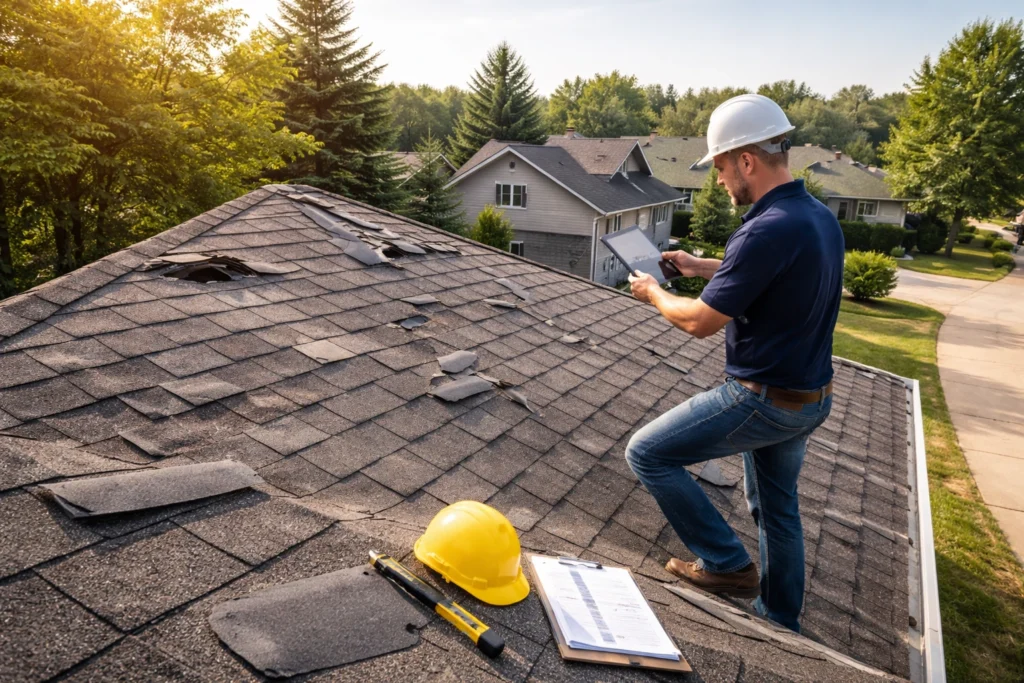
If you live in Pharr, you already know how fast a calm sky can turn violent. One strong windstorm. One hail event. One tropical system pushing inland. And suddenly your biggest asset is exposed. That’s where a roofing public adjuster becomes more than helpful — they become strategic protection.
Because here’s the truth. Roof insurance claims are rarely simple. They look straightforward on paper. Damage. Inspection. Payment. Repair. Done. But in reality? Underpaid estimates. Partial denials. Depreciation disputes. Code upgrade gaps. Delays. Confusion. Frustration.
A roofing public adjuster works for you — not the insurance company. And that distinction matters more than most homeowners realize.
Let’s break it down clearly.
What Is a Roofing Public Adjuster?
A roofing public adjuster is a licensed professional who represents policyholders during roof-related insurance claims. Their job is simple in concept but complex in execution: document damage accurately, value it properly, and negotiate with the insurance company so you receive the full amount you’re entitled to under your policy.
They are not roofers.
They are not insurance company employees.
And they are advocates.
Here’s how the roles differ:
| Type of Adjuster | Who They Work For | Who They Protect |
| Company Adjuster | Insurance Carrier | Insurance Carrier |
| Independent Adjuster | Insurance Carrier | Insurance Carrier |
| Roofing Public Adjuster | Homeowner | Policyholder |
Insurance company adjusters are not your enemy. But they are not your representative either. Their responsibility is to the carrier. A roofing public adjuster is legally obligated to represent your financial interest.
That alignment changes everything.
Why Roof Claims Get Underpaid in Pharr
Pharr sits in a high-risk weather zone. Wind-driven rain. Hail events. Extreme heat cycles. Proximity to Gulf systems. These conditions create complex roof damage patterns that are often underestimated.
Here’s where things commonly go sideways:
- Repair vs. Replace arguments – Insurers may claim spot repairs are sufficient when widespread damage exists.
- Depreciation calculations – Actual cash value policies can significantly reduce payouts.
- Overlooked soft metals – Vents, flashing, ridge caps, and drip edges often show impact before shingles do.
- Blaming wear and tear – Pre-existing condition arguments are common.
- Code upgrade gaps – Older roofs may not meet current Texas building codes.
I’ve seen it repeatedly. A homeowner receives an estimate that looks official and detailed. It feels final. But it’s incomplete.
A roofing public adjuster re-evaluates the scope from the homeowner’s perspective. And that often changes the numbers.
Signs You May Need a Roofing Public Adjuster
Not every claim requires outside representation. But many do.
Here are clear signals:
- Your insurance estimate seems significantly lower than contractor bids.
- The adjuster’s inspection felt rushed.
- You received a partial denial letter.
- Damage inside the home was not included.
- You’re overwhelmed by paperwork and deadlines.
- You’ve been told your roof can be “patched” but multiple slopes show impact.
- You’re being asked to provide multiple repair bids without clear guidance.
If you nodded at more than one of those, it’s time to pause and reassess.
How a Roofing Public Adjuster Handles Your Claim (Step-by-Step)
This is where real value shows up. A professional roofing public adjuster follows a structured process. No guesswork.
1. Policy Review
Insurance policies are contracts. Dense ones. A roofing public adjuster examines:
- Coverage type (Replacement Cost vs Actual Cash Value)
- Deductible structure
- Wind/hail exclusions
- Cosmetic damage clauses
- Ordinance & law coverage
The difference between “included” and “excluded” often sits in one sentence.
2. Detailed Roof Inspection
This isn’t a glance from the driveway.
A roofing public adjuster inspects:
- Shingles (lift, crease, fracture)
- Underlayment exposure
- Flashing damage
- Vent caps and soft metals
- Gutters and downspouts
- Interior water intrusion
- Attic moisture indicators
Many use drone imagery and high-resolution photography. Documentation is leverage.
3. Damage Documentation & Scope Writing
Photos alone are not enough. The claim must be translated into an itemized repair scope.
This includes:
- Line-item measurements
- Material matching
- Tear-off and disposal
- Flashing replacement
- Drip edge
- Starter shingles
- Ridge caps
- Underlayment
- Code-required upgrades
Most insurance carriers use estimating software like Xactimate. A roofing public adjuster speaks that language fluently.
4. Claim Valuation
This is where dollars are determined.
An incomplete scope results in an incomplete payout. Period.
A roofing public adjuster ensures:
- All damaged slopes are included
- Code upgrades are calculated
- Labor rates are accurate for the Pharr market
- Overhead and profit are properly applied when warranted
- Interior damage is connected to roof failure
It’s not about inflating numbers. It’s about accuracy.
5. Negotiation
Insurance carriers issue initial estimates. They are rarely final.
Negotiation may involve:
- Supplement submissions
- Photo rebuttals
- Engineering review responses
- Appraisal clause invocation (if necessary)
Most homeowners don’t want to handle this. And they shouldn’t have to.
Roofing Public Adjuster vs Roofing Contractor
This distinction matters.
| Roofing Contractor | Roofing Public Adjuster |
| Performs repairs | Represents policyholder |
| Provides repair estimate | Negotiates insurance payout |
| Focused on construction | Focused on claim settlement |
| Paid for labor/materials | Paid via contingency fee |
Contractors are essential. But their expertise is in installation. A roofing public adjuster specializes in claim interpretation and negotiation.
The two should collaborate — but they serve different roles.
When Should You Hire a Roofing Public Adjuster?
Timing is critical.
Ideal times include:
- Before filing a claim (policy review and damage verification)
- Immediately after storm damage
- After receiving a low estimate
- Following a partial denial
- Before signing a final settlement release
In Texas, there are statute limitations for filing and supplementing claims. Waiting too long can reduce leverage.
The earlier you get clarity, the stronger your position.
The Cost vs. The Value
Most roofing public adjusters work on a contingency basis. That means:
- No upfront fees.
- They are paid a percentage of the settlement.
- If there is no recovery increase, there is no fee.
Let’s look at a simple example:
| Scenario | Insurance Initial Offer | After Public Adjuster Review |
| Roof Claim | $14,500 | $32,800 |
That gap often comes from missing line items, code upgrades, and scope omissions.
Even after contingency fees, homeowners frequently walk away with significantly higher net proceeds.
That’s not theory. That’s math.
Why Pharr Homeowners Face Unique Roofing Challenges
The Rio Grande Valley climate is demanding.
- Extreme heat cycles degrade shingles.
- High winds cause uplift and creasing.
- Heavy rains expose weak flashing.
- Tropical systems cause compound damage.
Insurance adjusters deployed after storms may not be local. They may inspect dozens of homes per day. That pace can impact thoroughness.
A roofing public adjuster with local experience understands:
- Regional labor pricing
- Material availability
- City code requirements
- Typical storm damage patterns
Local insight is leverage.
Common Myths About Hiring a Roofing Public Adjuster
Let’s clear these up quickly.
“It will delay my claim.”
Proper documentation can actually accelerate resolution.
“Insurance will cancel my policy.”
Retaliatory cancellation for hiring representation is not standard practice and regulated by law.
“It’s too expensive.”
Contingency structures align incentives — they only get paid if you do.
“My roofer handles everything.”
Contractors do not negotiate coverage disputes or policy interpretation.
What to Look for in a Roofing Public Adjuster in Pharr
Not all adjusters operate the same way.
Use this checklist:
- Texas state license verification
- Local storm claim experience
- Clear written fee agreement
- Transparent communication process
- Detailed inspection methodology
- Strong documentation practices
- Proven negotiation track record
Ask direct questions. A reputable roofing public adjuster will welcome them.
Mistakes to Avoid After Roof Damage
Small errors can cost thousands.
Avoid these:
- Waiting weeks before documenting damage
- Throwing away damaged materials
- Signing contractor contingency agreements without understanding terms
- Posting claim details on social media
- Accepting the first offer without review
- Missing inspection appointments
- Ignoring interior damage indicators
Take photos immediately after a storm. Keep records organized. And if something feels incomplete, investigate it.
Final Thoughts: Protect the Roof. Protect the Investment.
Your roof is not cosmetic. It’s structural protection. It shields framing, insulation, electrical systems, and everything beneath it.
Insurance carriers manage risk. That’s their business model.
Your responsibility is different. It’s protecting your property value and ensuring your policy works when you need it most.
A roofing public adjuster exists to bridge that gap. To translate policy language into real dollars. To ensure storm damage is measured accurately. And to push back when numbers don’t align with reality.
In Pharr, storms are not hypothetical. They’re seasonal. Preparation matters.
If your roof has been damaged, or if your claim feels incomplete, don’t assume the first estimate is the final word. Ask questions. Get clarity. Bring in representation if necessary.
Because when it comes to roof claims, precision wins.
And the right roofing public adjuster can make all the difference.